
Diya Infotech’s Location Intelligence solutions help businesses analyze geographic data to uncover location-based insights. By combining spatial data with market, demographic, and behavioral information, we enable smarter decisions around expansion, pricing, marketing, and operations.
Location Intelligence Data Scraping
- Analyze location-based demand and performance
- Identify high-potential regions and micro-markets
- Support territory planning and expansion decisions
- Improve targeting with geo-level insights
- Deliver structured, map-ready datasets
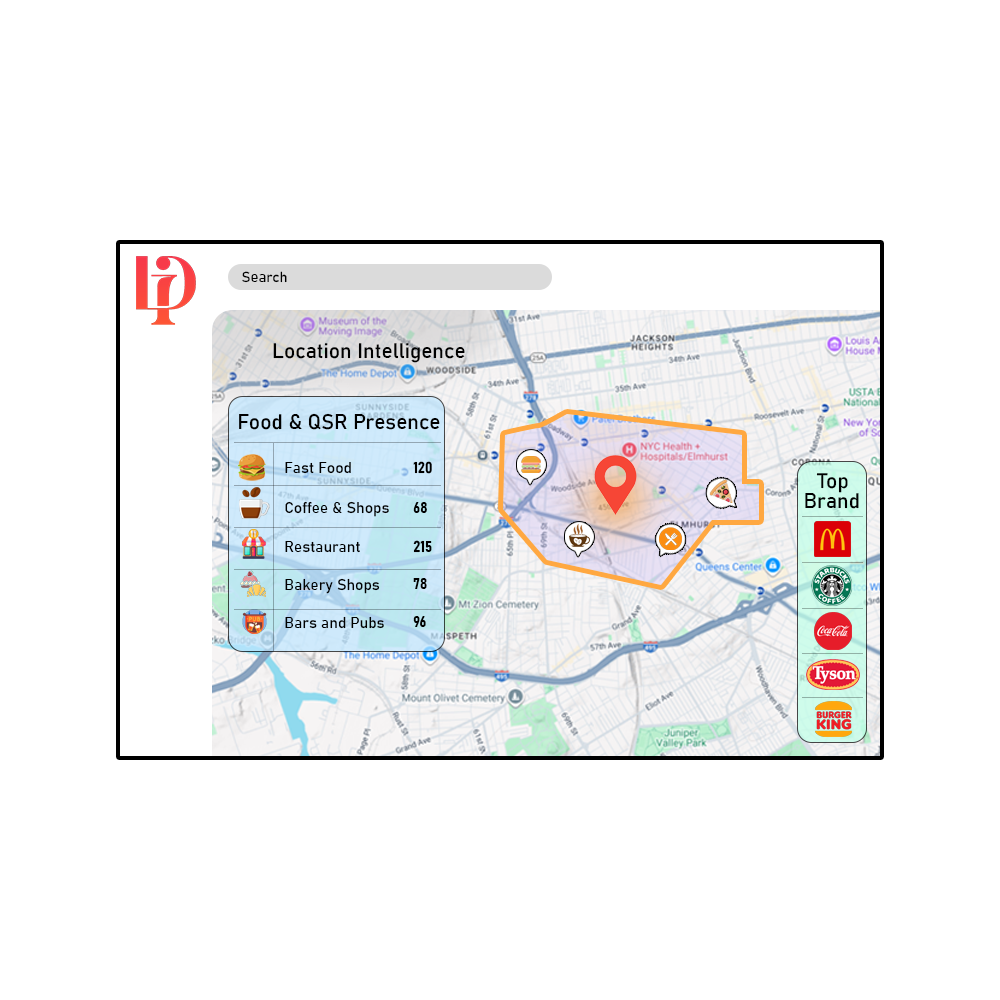
What Is Location Intelligence?
Location Intelligence uses geographic data to analyze how location influences customer behavior, market demand, competition, and business performance.
By combining location data with demographic, commercial, and behavioral information, Location Intelligence helps businesses uncover patterns and trends across regions. These insights support smarter decisions related to site selection, market expansion, and regional performance evaluation.
Location Intelligence transforms raw spatial data into actionable insights through mapping, analysis, and visualization. Businesses use it to identify growth opportunities, reduce operational risks, and optimize strategies based on accurate, location-driven intelligence.
WHY CHOOSE US
What Sets Us Apart

Accuracy
Delivers clean, reliable data you can trust every time.

Scalability
Handles any data volume smoothly without slowdown.

Global Reach
Captures insights from markets across the world.

Real-Time APIs
Provides instant, up-to-date data on demand.

Compliance First
Ensures all data practices meet global standards.

Dedicated Support
Project-based dedicated support 24*7.
Location Intelligence Capabilities
Geo-Data Collection
Collect location-based data from multiple digital sources, including websites, maps, and public datasets, to build a reliable geographic foundation.
Spatial Data Mapping
Convert raw location data into structured, map-ready formats for accurate geographic visualization and analysis.
Regional Demand Analysis
Identify demand patterns and customer behavior across cities, regions, and neighborhoods.
Competitor Location Tracking
Analyze competitor presence and density to understand market saturation and positioning by location.
Territory & Area Insights
Support territory planning and expansion strategies with clear geographic performance insights.
Location-Based Data Delivery
Deliver clean, standardized location datasets via APIs, dashboards, or downloadable formats for seamless integration.
Advantages of Location Intelligence Services
01
Smarter Site Selection
Identify high-potential locations for expansion by analyzing demand, competition, and regional performance.
02
Improved Market Targeting
Use location-based insights to target customers more effectively across regions, cities, and neighborhoods.
03
Better Regional Planning
Support territory planning and resource allocation with accurate geographic data.
04
Enhanced Competitive Insights
Understand competitor distribution and market saturation at a location level.
05
Reduced Business Risk
Minimize expansion and investment risks with data-backed location analysis.
06
Data-Driven Decisions
Make confident strategic decisions using reliable, location-based intelligence.
Use Cases for Location Intelligence Services
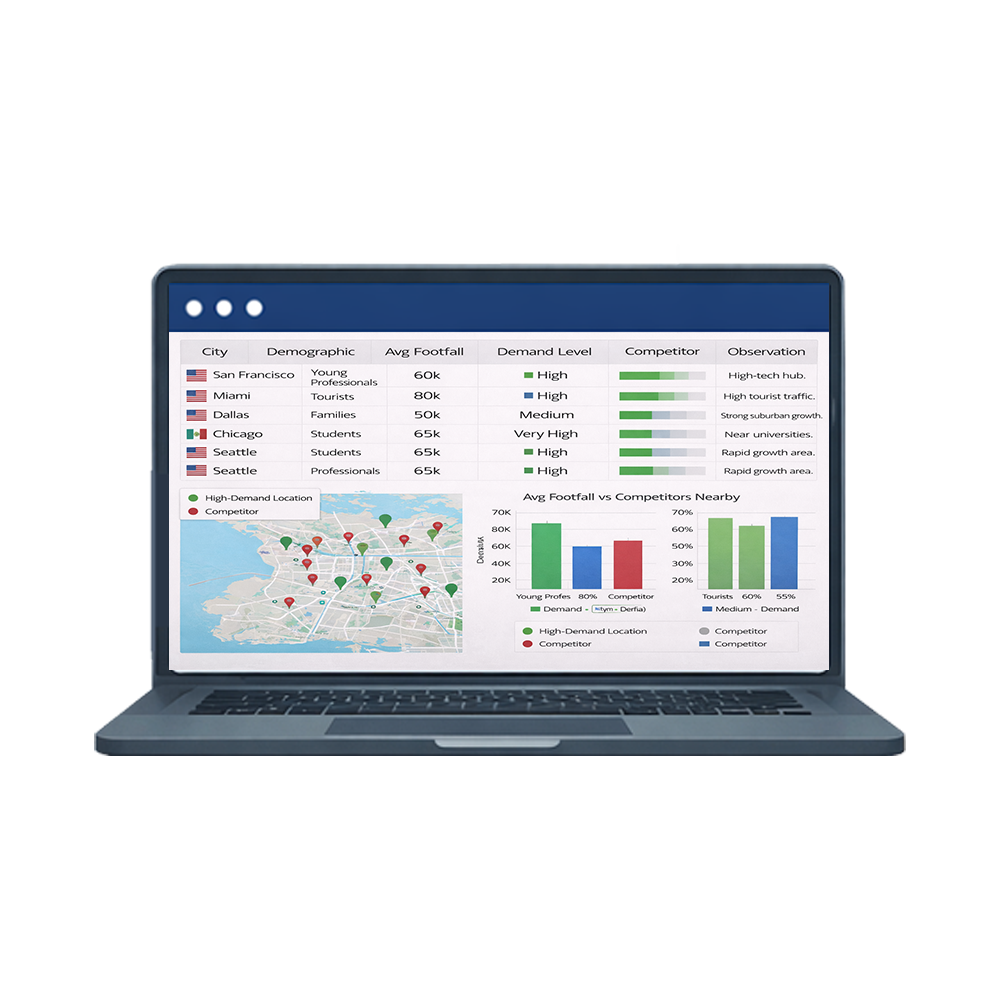
Site Selection
Identify high-potential locations for stores, warehouses, or offices using data-driven location insights.
- Analyze footfall, demand, and demographics
- Evaluate competitor proximity and density
- Reduce expansion and investment risks
- Improve long-term location performance
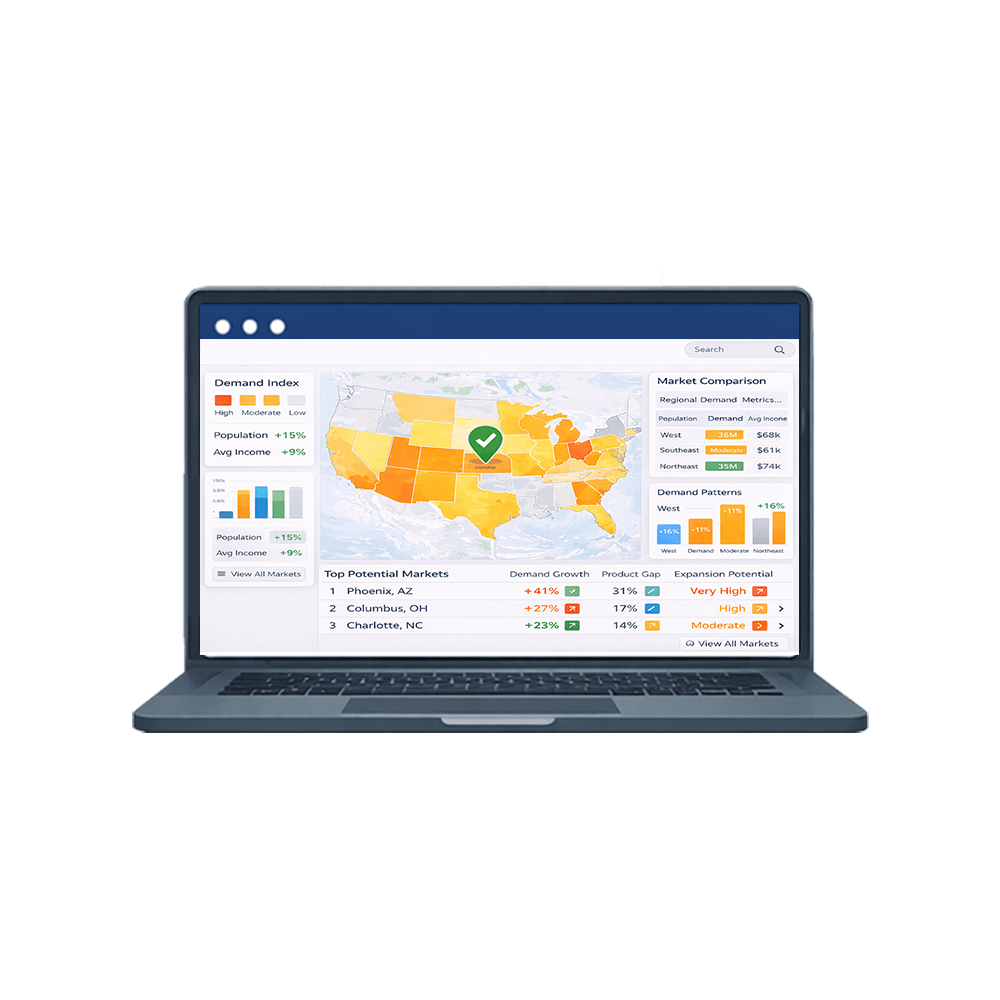
Market Expansion
Discover profitable regions and cities for geographic business expansion using location-based intelligence.
- Identify underserved and high-growth areas
- Compare regional demand patterns
- Prioritize expansion markets
- Support data-backed growth planning
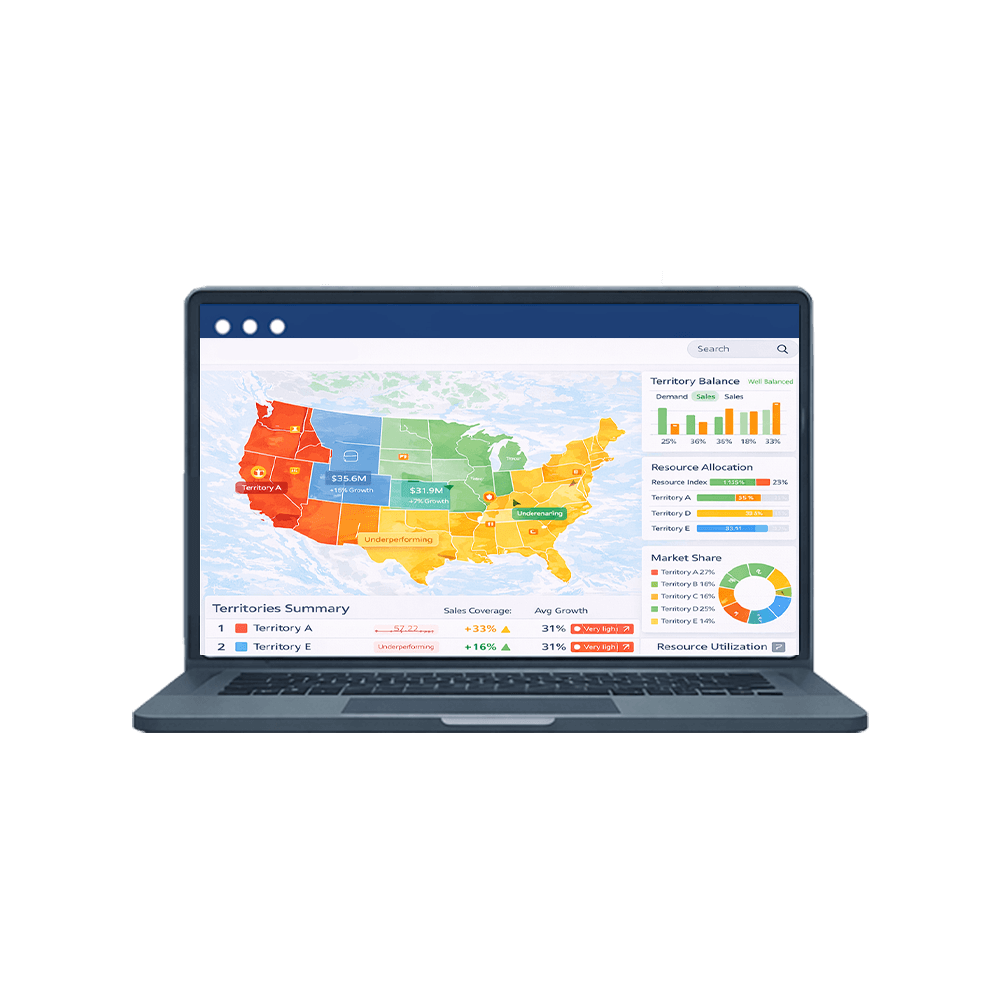
Territory Planning
Optimize sales and service territories using geographic performance and coverage analysis.
- Balance territories by demand and potential
- Improve sales coverage efficiency
- Identify underperforming regions
- Enhance resource allocation decisions
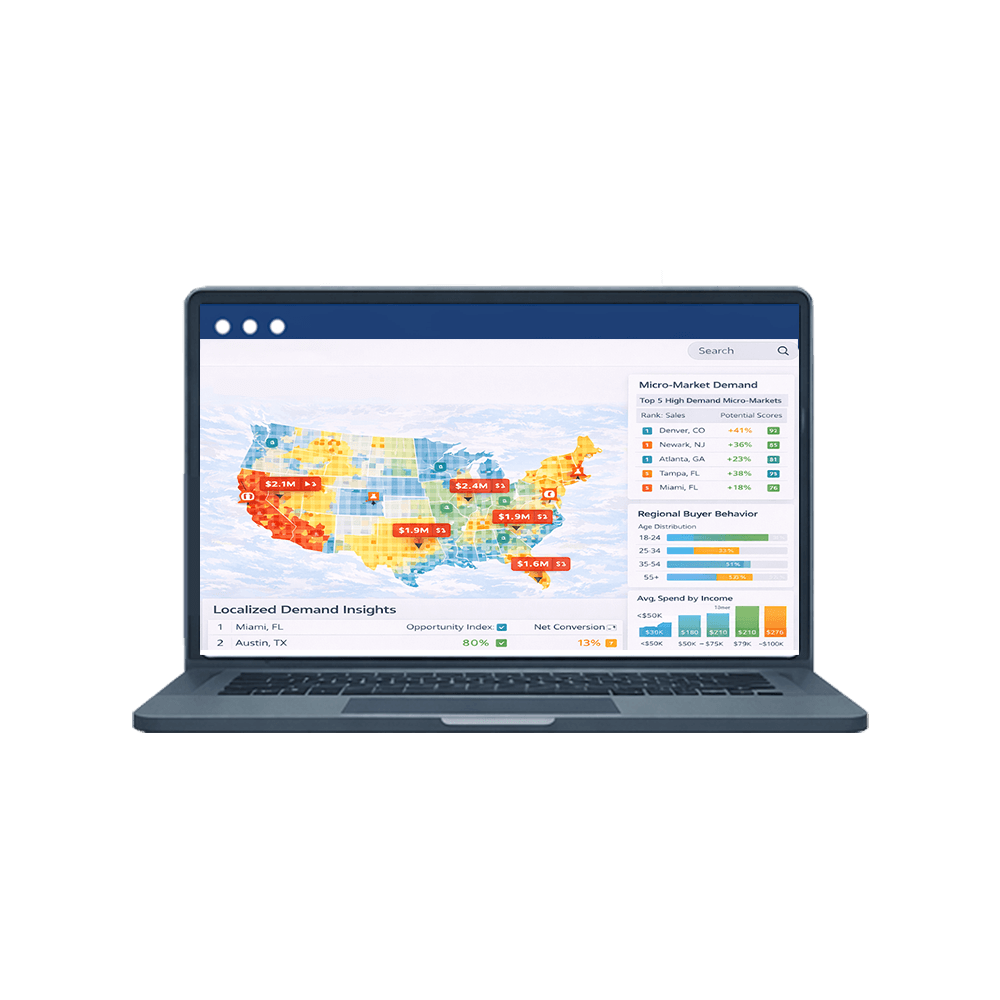
Demand Mapping
Understand customer demand variations across regions, cities, and neighborhoods.
- Detect high-demand micro-markets
- Analyze regional buying behavior
- Support localized marketing strategies
- Improve demand forecasting accuracy
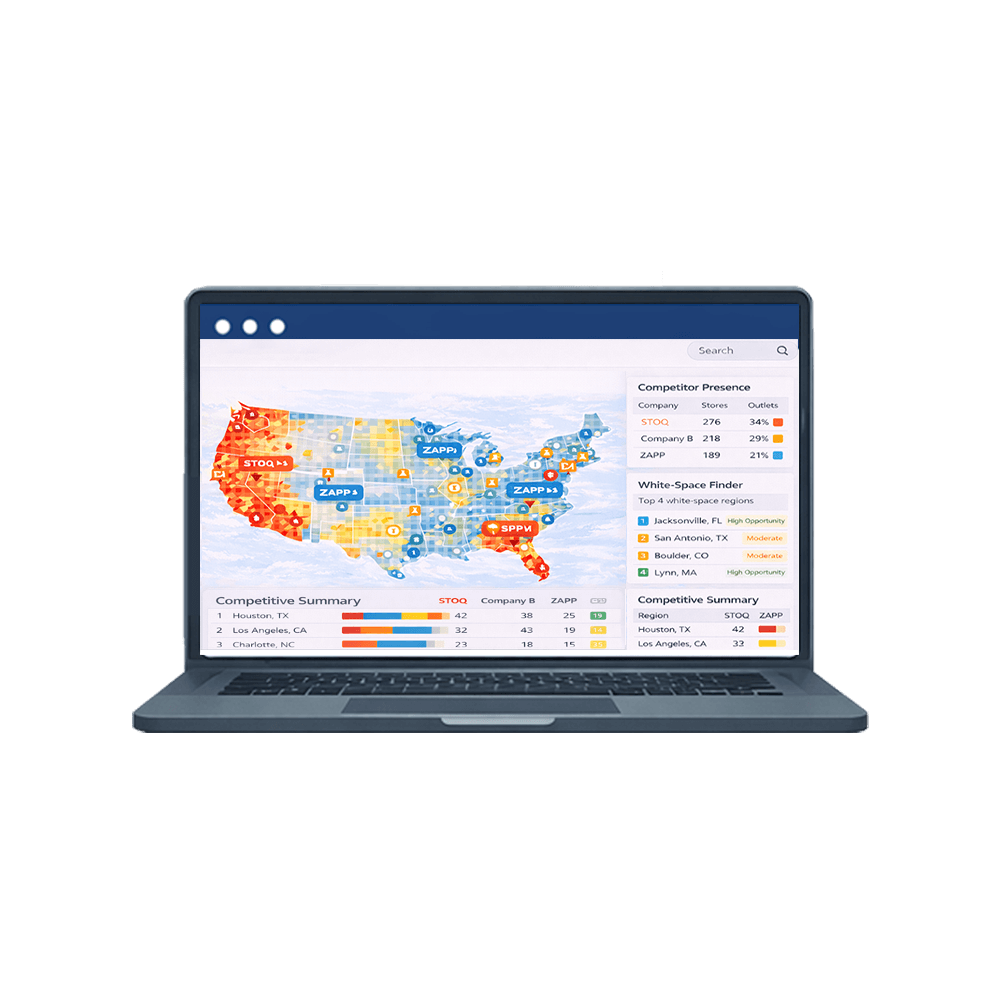
Competitor Mapping
Analyze competitor locations to understand market saturation and competitive intensity.
- Map competitor store and outlet presence
- Identify white-space opportunities
- Monitor regional competition levels
- Strengthen market positioning
Popular Website or Application Data Scraping
Food Delivery
- Doordash
- Swiggy
- Deliveroo
- Wolt
- Uber Eats
- Glovo
- Zomato
- Foodpanda
- Justeat
- Grubhub
OTT Platforms
- Netflix
- Hotstar
- Disney+
- Hulu
- Apple Tv
- Amazon Prime
- Sky
- Pluto Tv
- Dazn
- Discovery
Social Media
- FB/Insta
- YouTube
- TikTok
- X/Twitter
- Snapchat
- Quora
Hotel
- Airbnb
- Booking.com
- Ctrip
- MakeMyTrip
- Trivago
- TripAdvisor
- Expedia
- Agoda
- Priceline
- Google Travel
Recruitment
- Amazon Jobs
- Indeed
- Usajobs
- Glassdoor
- Ziprecrutier
- Monster
- Dice
- Roberthalf
- Snagajob
- Simplyhired
Dating
- Tinder
- Salt
- Her
- Eharmony
- Badoo
- Bumble
- Okcupid
- Hinge
- SilverSingles
- Match.com
NEED CLARITY?
Frequently Asked Questions
What is Location Intelligence?
Location Intelligence is the process of analyzing geographic data to understand how location impacts customer behavior, market demand, competition, and business performance.
How does Location Intelligence help businesses?
It helps businesses make data-driven decisions for site selection, market expansion, pricing strategies, territory planning, and regional performance optimization.
What type of data is used in Location Intelligence?
Location Intelligence uses geographic data, demographic information, points of interest, competitor locations, mobility data, and regional market indicators.
Which industries benefit most from Location Intelligence?
Retail, real estate, logistics, eCommerce, FMCG, banking, travel, and hospitality industries commonly use location intelligence for strategic planning.
Is Location Intelligence useful for small and large businesses?
Yes. Location Intelligence scales for both small businesses evaluating local markets and enterprises managing multi-region operations.
How is Location Intelligence data delivered?
Data can be delivered through APIs, dashboards, interactive maps, or downloadable formats such as CSV, Excel, or GIS-compatible files.
Can Location Intelligence support real-time analysis?
Yes. Real-time or near-real-time location data can be used to track demand shifts, competitor activity, and regional performance changes.
Is Location Intelligence data compliant and secure?
Yes. Data collection and processing follow ethical practices, data protection standards, and applicable regulatory requirements.
WHAT WE OFFER
Our Other Services


Get In Touch
We are your preferred data services partner. Our commitment to your success begins when you fill up this form and send it to us.
What's Next ?
You have made the right choice by connecting with us for your data extraction requirements. The below process how to get started.


