In an era where many restaurant brands struggle to sustain growth amid intense competition, McDonald’s stands out as a rare example of long-term consistency, scalability, and strategic execution. More than just the world’s largest fast-food chain, McDonald’s has become a defining part of the American restaurant landscape, known for its operational efficiency, franchise success, and data-driven location strategy.
Founded in 1940 by Richard and Maurice McDonald in San Bernardino, California, the brand began as a simple drive-in restaurant. Its transformation into a nationwide and later global powerhouse accelerated in the 1950 under Ray Kroc, who introduced the franchise model that reshaped the fast-food industry. Since then, McDonald’s has expanded steadily across cities, suburbs, highways, and small towns, placing its restaurants where visibility, foot traffic, and convenience intersect.
As of early 2026, understanding how many McDonald’s restaurants are there in the USA goes far beyond consumer curiosity. This data is actively analyzed by QSR competitors, real estate professionals, franchise consultants, food delivery platforms, and market research firms to evaluate market saturation, regional demand, and expansion potential. With over 40,000 restaurants globally and nearly a quarter located in the United States, McDonald’s remains a powerful case study in large-scale restaurant expansion.
In this guide, we provide a data-backed overview of McDonald’s presence in the U.S., including the latest restaurant count, regional and state-wise distribution, and the strategic factors that influence where McDonald’s locations operate today.
How Many McDonald’s Restaurants Are There in the USA?
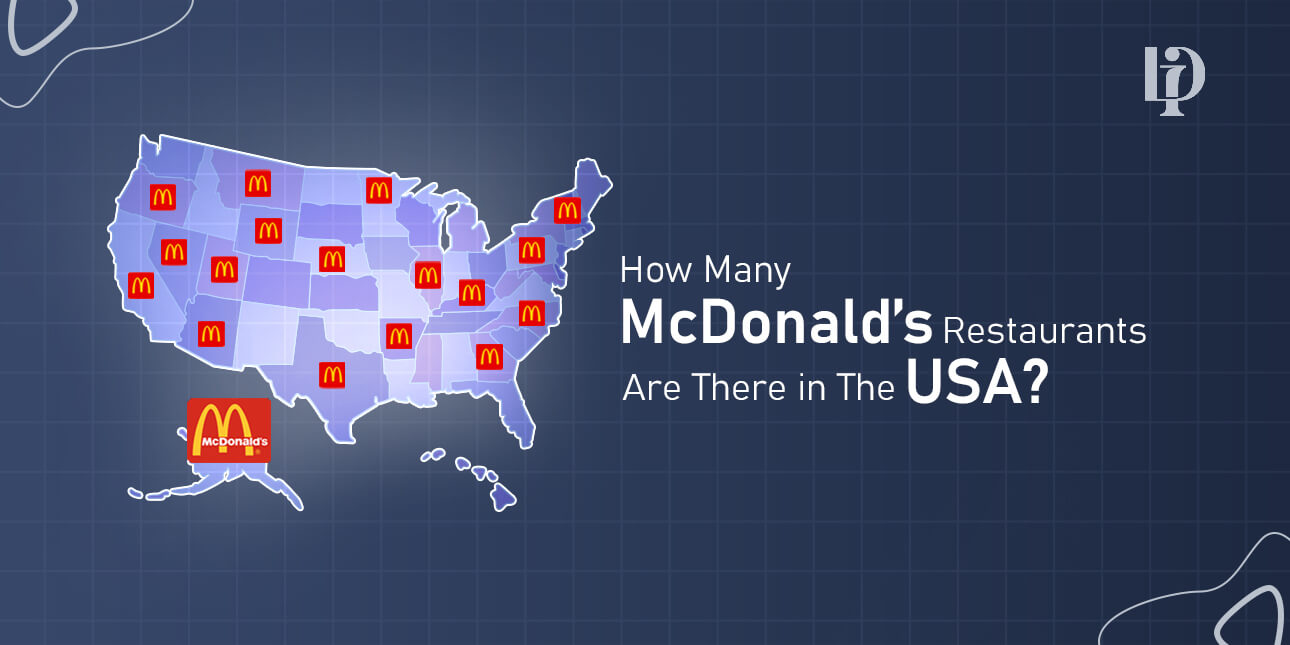
According to our research, there are approximately 13,814 McDonald’s restaurants operating across the United States, making the U.S. the brand’s largest and most important market globally.
This number includes both franchise-owned and company-operated locations, with the vast majority of U.S. restaurants run by franchisees. While McDonald’s global footprint continues to expand internationally, its U.S. store count remains relatively stable year over year, reflecting a mature market focused more on optimization, relocation, and performance rather than aggressive net-new expansion.
Key insights behind the U.S. store count:
- The United States accounts for nearly one-quarter of McDonald’s global locations
- Growth in recent years has been driven by strategic repositioning, not mass store openings
- Underperforming locations are occasionally closed while high-traffic and suburban markets see reinvestment
- Digital ordering, drive-thru demand, and delivery partnerships influence where restaurants operate
Because of this scale, McDonald’s U.S. location data is widely used for QSR competitive analysis, real estate planning, food delivery coverage mapping, and market intelligence. Even small changes in store distribution can signal larger shifts in consumer behavior and regional demand.
In the next sections, we break down where these McDonald’s restaurants are located, starting with a regional analysis across the United States.
Distribution of McDonald’s Outlets in the United States by State
McDonald’s presence in the United States varies significantly by state, influenced by population size, driving culture, franchise density, and real estate economics. For example, Texas and California are running neck to neck when it comes to McDonald’s number stores.
However, Texas is a bit ahead in the game due to its sprawling suburbs and highway culture. There is a McDonald’s store per 24,000 residents compared to California with one store per 32,000 residents, despite the latter having much bigger size.
Check out the below table to get a glimpse of the question: how many McDonald’s in the US.
The table reveals that McDonald’s has a sheer presence in 58 states and territories, except some remote areas like American Samoa.
| Rank | State / Territory | Number of Restaurants | % of US Total | Population per Restaurant (Approx.) |
| 1 | Texas | 1,212 | 9% | 23,500 |
| 2 | California | 1,233 | 9% | 32,200 |
| 3 | Florida | 885 | 6% | 24,300 |
| 4 | Illinois | 656 | 5% | 19,700 |
| 5 | Ohio | 617 | 5% | 18,900 |
| 6 | New York | 600 | 4% | 34,000 |
| 7 | Michigan | 522 | 4% | 19,100 |
| 8 | Pennsylvania | 476 | 3% | 26,900 |
| 9 | North Carolina | 550 | 3% | 22,000 |
| 10 | Georgia | 600 | 3% | 23,600 |
McDonald’s Presence by Region in the United States
McDonald’s restaurant distribution across the United States is not uniform. The brand’s footprint reflects population density, driving culture, franchise economics, and regional food consumption habits. Below is a region-wise breakdown showing how McDonald’s locations are spread across the country.
West
The Western United States has a strong but comparatively moderate concentration of McDonald’s restaurants. States like California, Arizona, Washington, and Nevada account for a large share of the region’s locations.
- California alone hosts one of the highest state-level store counts
- Urban centers, suburban corridors, and highway routes drive placement
- Higher real estate and labor costs limit over-saturation in major cities
In the West, McDonald’s focuses on high-traffic locations and densely populated metros, balancing premium real estate costs with consistent customer demand.
South
The Southern United States represents the largest concentration of McDonald’s restaurants nationwide. States such as Texas, Florida, Georgia, and North Carolina dominate this region.
- Lower real estate costs support wider coverage
- Strong drive-thru and car-dependent culture favors fast-food expansion
- Suburban and highway locations are heavily prioritized
The South remains one of McDonald’s most franchise-friendly and growth-resilient regions, making it a critical market for long-term stability.
Midwest
The Midwest holds deep historical and operational significance for McDonald’s. As the brand’s birthplace, this region maintains a dense and mature restaurant network.
- Illinois, Ohio, Michigan, and Indiana contribute heavily to store counts
- Smaller towns and rural areas still support profitable locations
- Strong brand loyalty and repeat customer behavior
In the Midwest, McDonald’s benefits from lower operational costs and long-established consumer trust, resulting in consistent performance across markets.
Northeast
The Northeastern United States has a comparatively lower number of McDonald’s restaurants, but demand remains strong due to high population density.
- Key states include New York, Pennsylvania, Massachusetts, and New Jersey
- Urban saturation and zoning regulations limit expansion
- Focus is on compact formats, delivery-friendly locations, and transit hubs
Rather than expanding aggressively, McDonald’s in the Northeast emphasizes efficiency, delivery reach, and premium urban placements.
Factors Considered for the Permission a McDonald’s Outlet
You cannot just open a McDonald’s store in your area. It does not happen randomly. There is a data-driven analysis for that. There are various parameters checked before offering the permission to open a McDonald’s store. These parameters are discussed below:
Demographics and Population Density
People who love to visit McDonald’s are families, young people and office goers with average salaries. Hence, they prefer areas with growing populations that fall in those categories. Some of the criteria that they count are age, income brackets, race, and projected growth of the area.
Traffic Patterns and Accessibility
Another parameter is traffic patterns and accessibility. They find sites with 20,000+ daily vehicles as potential ones, especially on going-home sides of roads. Also, they check drive-thru viability as well. 70% of US sales happen there. Also, if the site is the public transit hub, it is an added advantage.
Competition & Market Saturation
They also check the competitive landscape before issuing a franchise. For example, if there is a Burger King restaurant nearby the area, it will affect the density and placement of the restaurant, leading to higher concentration in competitive markets.
Economic and Zoning Factors
They also take cost into consideration while issuing a franchise. Property taxes, lease costs, and zoning laws also matter while starting a new McDonald’s restaurant. They always choose low-risk sites with commercial synergy to succeed. They also keep things like safety data, speed limits, and traffic directions in mind while choosing the site.
Local Culture and Demand
What are the eating preferences in the area you want to start an outlet? Do they love fast-food? If not, it will be a disastrous decision. On the other hand, tourist destinations and transient crowds prefer such food.
Such micro-analysis ensures that most McDonald’s ventures end up into successful businesses.
City-Wise Data for McDonald’s Stores
To get a better idea of how McDonald’s stores are spread across the USA, you also need to check city-wise stores.
As you can see in the below table, Houston in Texas tops the game, thanks to its resident needs, tourism, economic growth and local tastes.
| Rank | City | State | Number of Locations (Approx.) | Note |
| 1 | Houston | Texas | 125 | A widely recognized “fast food capital” of the US. |
| 2 | Chicago | Illinois | 102 | Home of McDonald’s Global Headquarters. |
| 3 | San Antonio | Texas | 80 | Another densely populated Texas metro area. |
| 4 | Las Vegas | Nevada | 73 | Driven by tourism and high visitor volume. |
| 5 | Los Angeles | California | 63 | Surprisingly low for its size, indicating different urban sprawl dynamics. |
| 6 | Phoenix | Arizona | 60 | A rapidly expanding Sun Belt city. |
How Businesses Use McDonald’s Location Data
McDonald’s extensive U.S. footprint makes its location data one of the most valuable datasets in the quick-service restaurant ecosystem. Beyond brand analysis, this data is actively used by businesses to make informed, location-driven decisions.
Real Estate & Site Selection Firms
Real estate analysts study McDonald’s locations to identify:
- High-footfall zones
- Proven commercial corridors
- Long-term viable retail locations
McDonald’s presence often signals strong consumer demand and sustainable traffic patterns.
QSR & Restaurant Chains
Competing fast-food and restaurant brands analyze McDonald’s store distribution to:
- Benchmark expansion strategies
- Avoid oversaturated zones
- Identify underserved suburban or highway markets
McDonald’s data acts as a reference model for scalable restaurant growth.
Food Delivery & Aggregator Platforms
Delivery platforms use McDonald’s location intelligence to:
- Optimize delivery coverage
- Balance driver density
- Improve service time predictions
Accurate restaurant data ensures better logistics planning and customer experience.
Market Research & Consulting Firms
Analysts rely on McDonald’s location datasets to:
- Study regional food demand
- Compare urban vs suburban consumption
- Track long-term QSR market trends
This data supports reports, forecasts, and investment decisions.
Why Accurate Location Data Matters
Outdated or incomplete restaurant data can lead to:
- Poor market entry decisions
- Inefficient delivery operations
- Misaligned expansion strategies
This is why businesses increasingly depend on custom, compliant, and frequently updated restaurant location datasets.
At Diya Infotech, we help businesses extract and structure restaurant and food delivery data at scale, enabling reliable market intelligence for analysis, planning, and growth.
Conclusion
So what would be the answer to the question- how many McDonald’s restaurants in USA? Well, we have already covered it in the blog. The approximate answer is 13,700 outlets spread across the USA.
The reason behind the massive success of McDonald’s is its accessibility and its ability to pin-point the right locations, based on real-time data such as demographics, competitive landscape, traffic, and others. Though StarBucks and Subway may suppress McDonald’s in raw location count, there is no match with the latter when it comes to cultural weight, global scale, and superlative average sales volume per store.