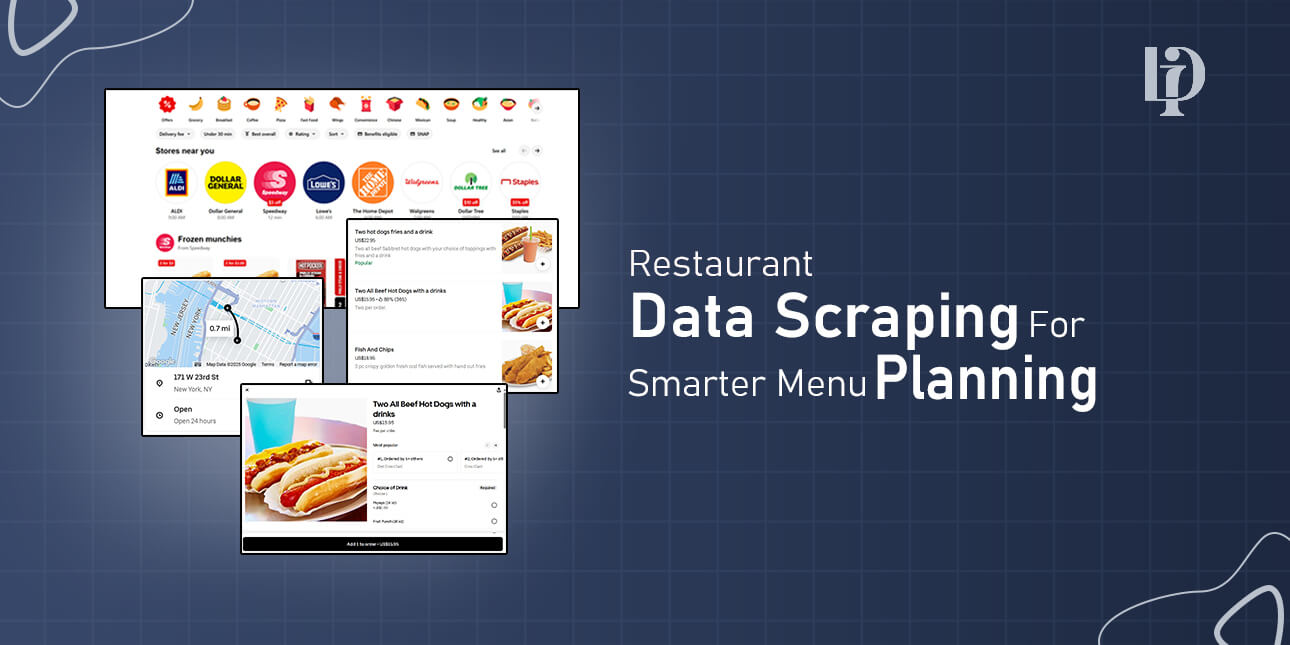
Competitive US restaurant market, menu planning can’t rely on guesswork. Customer preferences change rapidly, competitors adjust pricing frequently, and food trends go viral overnight. For example, when a nearby competitor updates prices on DoorDash or adds trending items like “hot honey chicken” or “protein bowls,” it can change customer demand in just a few days. That’s why many restaurants ranging from local cafés to national chains are using restaurant data scraping to make smarter business decisions.
By extracting restaurants data such as menu prices, product descriptions, customer reviews, and trending food keywords from multiple online sources, restaurant owners can build data-driven menus that sell better and improve profitability.
This guide explains how restaurant data scraping services support menu optimization, competitor monitoring, pricing strategies, and long-term restaurant growth across the USA.
The Power of Restaurants Data Scraping
Restaurants Data offers a clear view of the market. Every day, thousands of new reviews and menu items appear online. So, tracking this manually is impossible. However, automated data extraction handles this process. It collects prices, descriptions, and ratings instantly.
Consequently, Restaurant data crawling provides the raw inputs, while food data scraping converts that information into actionable insights. With the right data, restaurant teams can understand what customers want now and respond faster than competitors. This makes data scraping a key advantage for modern restaurant operations.
Why Restaurant Businesses in the USA Need Food Data Scraping
Food data gathering is not just for big chains. Small bistros in New York or cafes in LA also
benefit. Restaurant food menu data scraping reveals what your local competitors are doing. Additionally, it’s shows you pricing trends in your specific neighborhood.
With reliable data scraping, it becomes easier to determine whether your pricing is competitive and which menu categories are gaining traction. It also helps detect fast-growing demand for trends such as “vegan,” “keto,” and “gluten-free.” In short, data scraping helps restaurants stay relevant, competitive, and aligned with local demand.
Strategic Decisions
Restaurants Data Scraping drives better strategic decisions especially when you open new food business and introducing new items. For example, you might want to launch a new spicy chicken sandwich. But, is the market ready? This tool can tell you. It analyses competitor success with similar items.
Furthermore, this approach reduces risk by replacing assumptions with facts. Instead of guessing what customers might like, restaurants can validate product ideas and pricing before investing in menu changes or promotions. In that sense, data extraction becomes a practical safety net for innovation.
Optimizing Menus
Food data scraping is the key to menu engineering. You can identify your “stars” and “dogs”. Food data scraping highlights high-margin items that are popular. Conversely, food data scraping shows which items are failing.
It provides the data for this analysis. With this information, you can adjust descriptions to boost sales. Also, data extraction helps you place items strategically on the menu. Thus, food data scraping directly boosts your bottom line.
Competitive Pricing
Pricing is one of the biggest factors influencing customer choice in the US market. Competitive pricing requires accurate market visibility, and that’s where restaurant food data scraping becomes valuable. By monitoring competitor pricing in real time, restaurants can make timely updates instead of reacting too late.
If a rival lowers their pizza price, Restaurants food data scraping alerts you. Then, you can react quickly. Restaurants data scraping ensures you remain competitive. Additionally, it’s helps you justify premium prices for unique items.
Restaurant data scraping enables dynamic pricing by continuously tracking changes in the market. This prevents under pricing signature dishes and protects profit margins over time.
Enhancing Customer Experience
Restaurant data scraping can also improve customer experience by analyzing diner sentiment. Food data scraping gathers feedback from platforms like Yelp and Google. Food data extraction reveals what diners love or hate.
Instead of reviewing feedback manually, restaurants can detect service gaps at scale. For example, the data may show repeated concerns about portion size, consistency, or service delays. With these insights, restaurant teams can make targeted improvements and increase satisfaction faster.
The Role of Restaurants Data Scraping Technology
Data scraping technology is evolving rapidly, becoming faster and more accurate each year. Advanced scraping tools can collect large volumes of menu and review data efficiently and convert it into structured information that supports decision-making.
You need robust Restaurants data scraping technology to stay ahead. It enables precise data gathering. Without advanced Restaurants data scraping technology, you miss critical updates. Therefore, investing in this tech is wise.
Trends and Food Data Scraping
Food data scraping helps restaurants spot culinary trends early. If a trend like “hot honey” starts appearing more frequently on menus, scraping tools can detect increased mentions and highlight that growth across locations and competitors.
Restaurants Data Scraping lets you ride the wave. You can add trending items before your competitors. It keeps your menu fresh. Moreover, food data scraping helps you innovate. Food data scraping ensures you are a leader, not a follower.
Combining Data Scraping and Analysis
Food data scraping and food data analysis go work best together. Scraping gets the data. Analysis makes it useful. When combined, they form a strong strategy for menu planning and long-term growth.
Data scraping provides the numbers of prices, menu changes, review trends while analysis identifies patterns such as rising demand, pricing sensitivity, and customer preferences. This combination of food data scraping and food data analysis drives growth.
Supply Chain Efficiency
Restaurants Data Scraping even helps with supply chains. It can predict demand for ingredients. So, you order exactly what you need. This tool reduces waste.
In addition, scraped data can help track ingredient availability or spot potential shortages in the market. These insights help kitchens stay prepared, avoid disruptions, and maintain menu consistency.
Mastering Restaurant Growth Strategies
Restaurant Growth Strategies rely on data. Restaurants Data Scraping is the foundation of these strategies. Effective Restaurant Growth Strategies use insights to expand.
Restaurants can use this information to evaluate new locations, understand local pricing expectations, and track customer preferences in different cities. By using data to guide expansion, businesses reduce uncertainty and increase the success rate of new outlets or franchise growth.
Personalized Marketing
Data extraction also supports personalized marketing. Food data scraping helps identify what specific customer segments prefer, what dishes drive engagement, and which offers are likely to convert.
Restaurants Data Scraping makes marketing cheaper. You target the right people with the right offers. This strategy increases conversion rates. Thus, food data scraping maximizes your marketing ROI.
Conclusion
Restaurant data scraping has become essential for restaurants across the USA. It strengthens menu planning, improves pricing decisions, enhances customer experience, and supports operational efficiency. With better market visibility, restaurants can respond faster, compete smarter, and grow more sustainably.
Food data scraping is a direct path to stronger profitability and better planning. By using restaurant data scraping consistently, businesses can protect margins, spot trends early, and make confident decisions. Ultimately, data scraping is shaping the future of menu strategy and restaurant growth.